
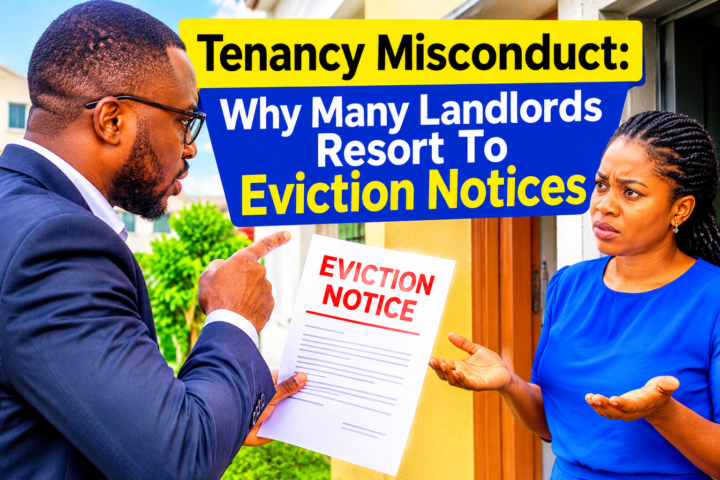
The relationship between landlords and tenants is expected to be built on mutual respect, trust and compliance with agreed obligations. Unfortunately, what begins as a cordial relationship sometimes deteriorates into disagreements, hostility and, eventually, the issuance of notices to quit. While rent increases and the personal needs of landlords are often cited as reasons for terminating tenancies, misconduct by either party remains an important factor in the breakdown of many tenancy relationships.
Tenancy misconduct refers to improper, unreasonable or unlawful behaviour by a landlord or tenant that violates established obligations or interferes with the legitimate rights of the other party. It may involve breaches of tenancy agreements, disregard for property regulations, harassment, nuisance or other conduct that makes the continuation of the relationship difficult.
In many cases, eviction proceedings are not the immediate result of a single disagreement. They follow a gradual breakdown of communication and confidence between the parties. A landlord who initially overlooks certain unacceptable behaviours may eventually conclude that the tenancy can no longer continue. Similarly, a tenant who experiences repeated harassment or neglect may become unwilling to cooperate with the landlord.
One common source of conflict is the persistent failure of tenants to pay rent when due. Rent is the principal consideration for occupying rented premises, and landlords naturally expect payment according to agreed terms. Where a tenant repeatedly defaults, ignores reminders or makes promises that are never fulfilled, the landlord may lose confidence in the tenant’s willingness to honour the agreement.
However, inability to pay rent should not automatically be regarded as deliberate misconduct. Financial hardship, unemployment or unexpected personal circumstances may affect an otherwise responsible tenant. The distinction between genuine inability and wilful refusal is important when considering the appropriate response.
Another frequent cause of tenancy breakdown is the misuse of rented property. Some tenants make unauthorised structural alterations, damage fittings, overcrowd premises or use residential accommodation for purposes inconsistent with the tenancy agreement. Others engage in activities that disturb neighbours or threaten the peaceful atmosphere of the property.
Persistent noise, aggressive behaviour, threats and disregard for reasonable estate regulations can gradually turn a peaceful residential environment into a centre of recurring disputes. Where such conduct continues despite complaints and warnings, a landlord may consider termination of the tenancy necessary to protect other occupants and the property itself.
Disrespectful communication also contributes significantly to tenancy disputes. Some tenants respond to legitimate enquiries with insults, threats or unnecessary confrontation. Equally, some landlords approach tenants with an exaggerated sense of authority, forgetting that payment of rent creates enforceable rights and obligations on both sides.
A landlord does not become entitled to humiliate a tenant simply because he owns the property. Neither does a tenant acquire the right to disregard reasonable obligations merely because rent has been paid. Ownership and occupation confer different rights, but both must be exercised responsibly.
It is equally important to recognise misconduct by landlords. Unlawful entry into rented premises, intimidation, deliberate disconnection of utilities, refusal to perform legally required repairs and attempts to force tenants out without due process are examples of conduct capable of destroying tenancy relationships.
Indeed, some disputes that eventually reach the courts could have been avoided if landlords had adopted a more professional approach to property management. Tenants are entitled to peaceful occupation, privacy and the protection of applicable tenancy laws. These rights should not be treated as privileges granted at the landlord’s discretion.
Nevertheless, not every disagreement constitutes misconduct, and not every act of misconduct provides an automatic legal ground for eviction. A tenant may legitimately question an excessive demand, request repairs or challenge an unlawful charge without being labelled troublesome. Likewise, a landlord may lawfully decline to renew a tenancy without necessarily being guilty of harassment.
The legal distinction is particularly important because tenancy relationships are governed by agreements and applicable state laws. A notice to quit is ordinarily a step towards terminating a tenancy, not an eviction order in itself. Where a tenant fails to surrender possession after the tenancy has been lawfully determined and the required procedures have been followed, the landlord may seek recovery of possession through the appropriate court.
Consequently, landlords should avoid treating notices to quit as instruments of punishment or intimidation. The validity of a notice and the procedure for recovering possession depend on the nature of the tenancy and the applicable law. Tenants, on their part, should not assume that the existence of legal protections gives them unlimited freedom to disregard contractual obligations.
The most effective response to tenancy misconduct is prevention. Clear tenancy agreements, proper documentation, prompt communication and fair handling of complaints can substantially reduce misunderstandings. Where disagreements arise, negotiation and mediation should be considered before positions become irreconcilable.
Multi-Door Courthouses and other institutional mediation centres provide opportunities for landlords and tenants to resolve disputes without immediately resorting to prolonged litigation. Through mediation, parties may agree on rent arrears, repairs, behavioural changes, timelines for vacating premises or other practical arrangements.
Ultimately, the increasing resort to quit notices should encourage a broader examination of behaviour within tenancy relationships. Although not every notice arises from misconduct, persistent disregard for mutual obligations can make continued occupation unacceptable to one or both parties.
A healthy tenancy relationship requires more than the payment and collection of rent. It demands respect, responsibility, restraint and a willingness to resolve disagreements fairly. When these qualities are absent, even a tenancy that began on friendly terms may end in avoidable eviction proceedings.
The lesson is simple: preventing tenancy misconduct is often easier, cheaper and more beneficial than managing the consequences of a broken tenancy relationship.
Comments